Look, I know what I said.
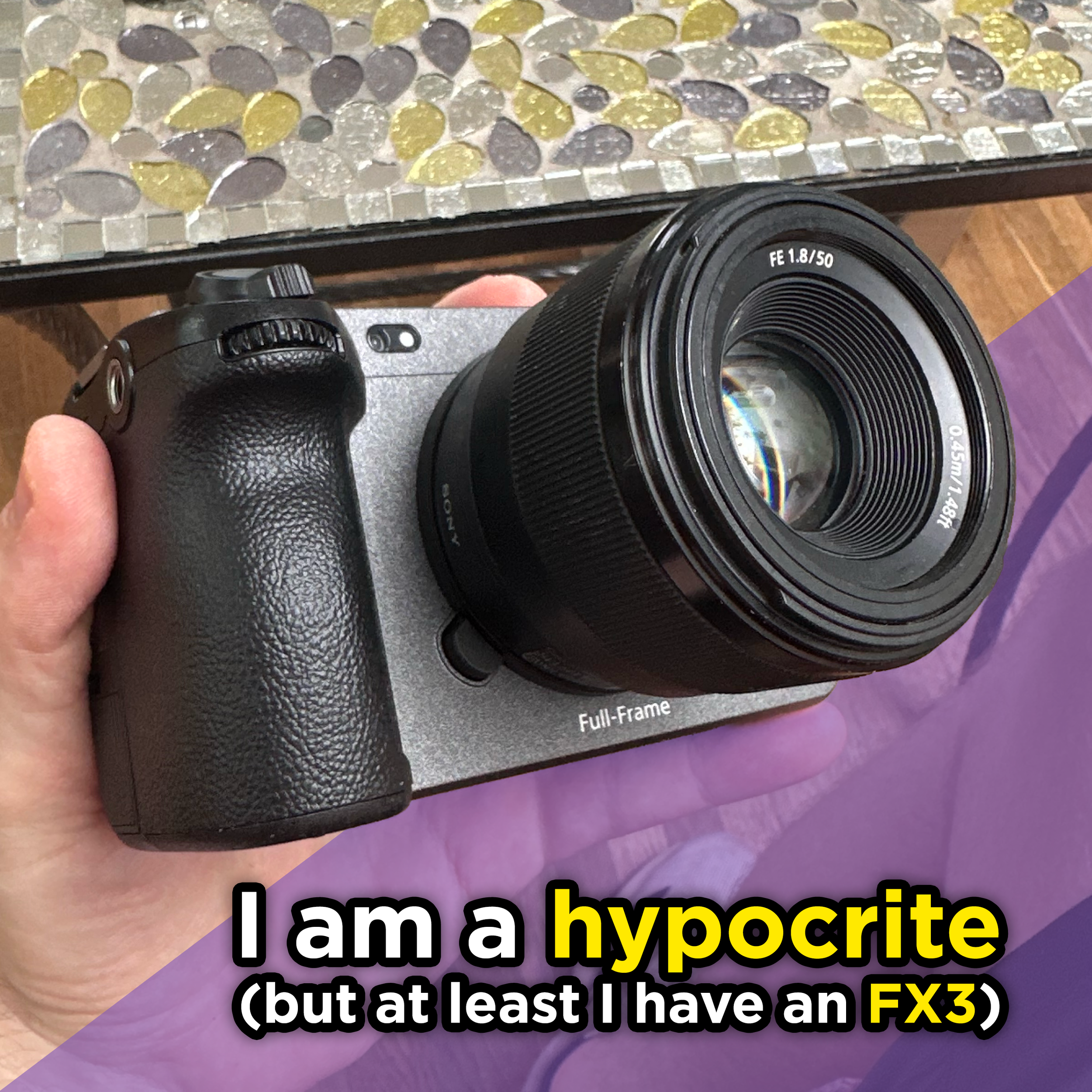
Literally yesterday, I posted a meme that said “I don’t NEED an FX3.” I talked a big game about the difference between having GAS (gear acquisition syndrome) and practical necessity. I said the gear doesn’t make the creative…
….and I still mostly stand by that. But I’m also a weak, weak man.
I just bought a Sony FX3. (and it’s freaking awesome)
Before I get into the why, let’s pour one out for my workhorse camera, the Sony A7III. It has been my primary camera for years, carrying my commercial video business through countless product shoots, time-lapses, and on-location sets across Little Rock.
But, as my client’s media needs have grown, so have the technical limitations of my gear. The A7III, at its core, is an amazing photography camera that shoots great video. It can get the job done, but it’s not really made for video, and, as a videographer, I kinda need a camera that’s made for videos.
Here’s why I made the switch.
Key Takeaways
10-Bit Color: Upgrading from 8- to 10-bit color means less time spent colorgrading
Dual Base ISO: The FX3 can effectively shoot in the dark
Camera Stabilization: Internal gyroscopic data is written into the footage
10-Bit Color
This was one of the biggest driving factors for my upgrade. Colorgrading on the Sony A7III is so bad that it’s a meme in the videography community. Try posting “color grading” and “A7III” on the same Instagram Reel and legions of angry cinematographers will rise up from the depths of their parents’ basements to comment mean things on your post.
I would always spend HOURS working on the grade for my commercial projects, which meant I either had to take a pay cut or charge my client more money. Neither of these are feasible long-term. With the FX3’s 10-bit color, I’m able to bring it into Premiere, throw on a LUT, and tweak to my liking, easy as pie.
Dual Base ISO
When you have time to light a professional set, the A7III can produce some extremely nice, clean visuals. My job has a much more run-and-gun nature, meaning that I have 0 control over light or need to rely on a camera-mounted light system. With the FX3, I have a Dual Base ISO of 800 and 12,800, meaning that I can essentially shoot in the darkness and still pull clean, usable footage.
I’m especially excited for this, because it means I now have an outlet for my millennial angst. My The Batman fan film is about to be so lit.
Camera Stabilization
The A7III’s In-Body Image Stabilization (IBIS) worked well enough for small jitters, but almost all handheld footage needed at least 50% Warp Stabilizer to be usable. I’d often be dealing with weird movements or digital warping on the edges of the frame.
The FX3 uses Active Mode stabilization, which crops the image 10%, but uses the processor to digitally smooth out handheld footage in real-time. This makes it incredibly effective for run-and-gun shooting.
The real magic, however, is in the gyro metadata. The FX3 has an internal gyroscope and records that data directly into the video file. When you pull the footage into Premiere Pro, that metadata helps to stabilize the clip perfectly based on how the camera actually moved on set. The future is NOW!
The Wrap Up
So, will the Sony FX3 make me a better videographer? No way.
But, it will remove the technical friction between having an idea and executing it. I’ve loved my time with the A7III, but the FX3 is going to open up even more doors for zeedubyah creative. Want to help me open those doors? Schedule a consultation call here!